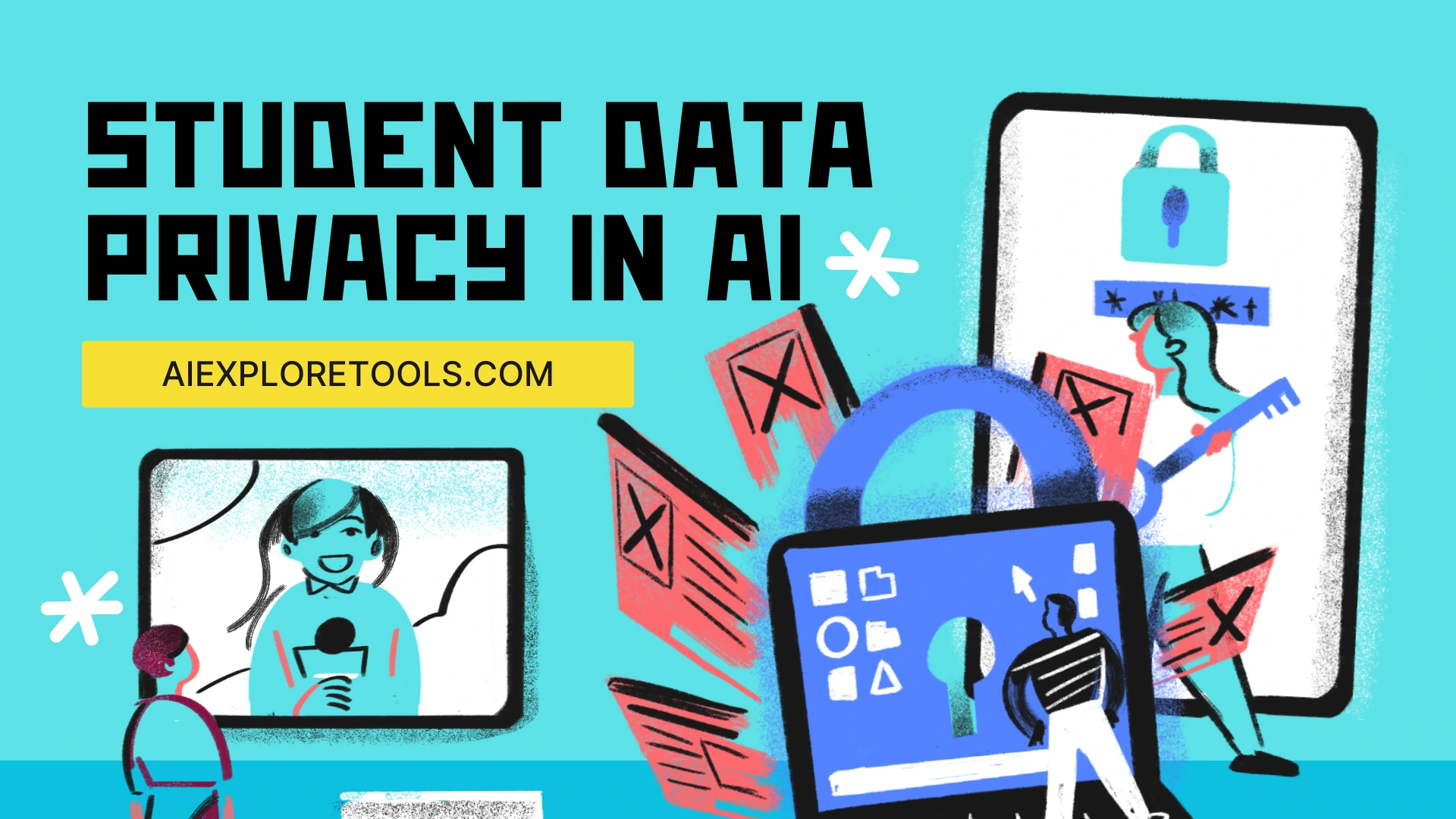
Educational systems are undergoing transformation as student data privacy in AI is playing an integral part in how education will be provided throughout the world. The development of intelligent tutoring systems and predictive analytics tools makes it possible to build personalized lesson plans based on each student’s individual needs and learning style.
As schools increase their use of AI technology, it will provide numerous opportunities for students to learn better than ever before while, at the same time, collecting and processing a much larger amount of student data; thus, privacy protection for students’ data is now at the forefront of discussions of education around the globe.
In today’s world, protecting student data includes more than just technical solutions, it also encompasses ethical, legal and social responsibility. The misuse of student information can have adverse effects that will be felt throughout a student’s lifetime, students are especially vulnerable to this happening. This paper will explore how schools worldwide can safeguard their students’ privacy and how AI-supported learning systems will further enhance the educational experience of every student when used ethically and responsibly.
Understanding Student Data in AI-Powered Education
The utilization of student data in AI-based education technologies is important to understand how AI educational technologies work, as well as the ways that student data privacy relate to AI.
AI educational technologies generally collect and process the following categories of student data:
- Personal identifying information, such as name, age, address, and student ID
- Academic record type information, such as grades, attendance, assessments, and timetable of assessments
- Data related to how students learn, including their rate of learning, engagement level, and the number of times they interacted with the AI educational technology.
- Biometric data, such as the voices and/or facial expressions of students (varying by AI educational technology).
AI based educational technologies analyze this information to identify patterns of learning and to help educators provide individualized and personalized learning experiences; therefore while improving learning outcomes, AI educational technology creates concern about the improper use of AI educational technology data or the improper violation of laws and societal norms related to protection of privacy and the monitoring of people’s activities.
Schools around the world are governed by a variety of legal and cultural contexts, but all share a common concern regarding the responsible utilization of AI in a manner that preserves student confidence and trust.
Why Student Data Protection in AI is a Global Concern
Student data privacy is a global issue because education systems worldwide – regardless of resource level and technological capability – experience similar challenges related to student data privacy. Here are four ways that student data privacy in AI has become a global concern:
1) Long-Term Implications for Students
Students carry their student data with them for many years, and even small errors, biases, or unintentional exposure of their student data may have negative long-term impacts on their academic opportunities, mental health, or future workforce participation.
2) Threats to Cybersecurity are Growing
Schools are attractive targets for cybercriminals in that they store a large amount of very valuable personal information. Most schools also do not have advanced cybersecurity systems. The use of machine learning and artificial intelligence technologies complicates the cybersecurity landscape for schools because of the potential for an increased attack surface.
3) Algorithmic Bias & Profiling
Machine learning and artificial intelligence systems may use biased and/or incomplete data to make predictions about students’ performance levels and outcomes that could lead to negative profiles and labels. The value of protecting student privacy also applies to protecting them from being profiled.
4) Trust in Educational Technology
Parents, students, and educators may lack confidence in using intelligent learning tools when these tools do not have strong privacy protections, resulting in a slowdown in the rate of innovation and adoption of educational technology.
Ensuring the protection of student data from an AI
In every country on earth, presents one of the largest obstacles to the global implementation of AI technology.

Schools and Educational Agencies should adhere to the following principles to protect the privacy of student data, when working with AI technology.
- Minimize the amount of data collected for supporting student learning. AI technology should not collect an excess of personal data just because it can access this type of data.
- The data collected from students, may only be used for educational, constructive, and positive reasons. Commercial use of student’s data (such as advertising) does not belong in an educational setting.
- All students and their parents should be made aware of what type of data will be collected, how the data will be used, and how long the data will be kept on the system. Transparency in data collection and usage will assure students, their parents, and the school system, of accountability and trust with AI systems.
- The privacy of students should be considered in the very early design stages of creating an AI system. Students’ privacy codes of conduct should be incorporated into the system’s structural design through encryption, access control, and continual audit of the security processes.
How Schools Can Ensure Students’ Privacy in an Increasingly Digital World
Having the right technology, by itself, does not ensure that student data will be adequately protected from the growth of AI. Developing institutional policies that protect the privacy of students’ data is equally critical.
Clearly Defined Data Governance Frameworks
Schools must establish clear guidelines that define the ownership and access rights to student data as well as the conditions under which it may be accessed. This will reduce confusion and limit the risks associated with unauthorized access to student data.
Vendor Responsibility
Many third-party companies create and develop AI tools. Schools have to hold the vendors accountable for adhering to privacy standards and ethical AI development practices, and for complying with local, state and national data protection laws.
Education and Training of Staff Regarding Data Privacy
Teachers and school administrators must possess a basic understanding of data literacy as it pertains to AI. A basic understanding of how AI systems gather and process student data will assist in preventing unintentional or accidental data breaches or misuse.
Ongoing Risk Assessments
Regularly scheduled reviews of the school district’s privacy policies and procedures can assist in identifying potential privacy risks as new AI capabilities and platforms become available.
It is important to ensure that the school district’s Governance Policies will treat privacy as an ongoing responsibility and will not simply treat it as a one-time activity that is checked off as complete.
International Perspectives on Student Data Privacy in AI
While student data privacy laws and regulations regarding AI vary from one part of the world to another, there are some commonalities surfacing around the globe.
- The majority of countries place considerable importance on securing consent from users, particularly in relation to minors.
- There is an increasing tendency for regulators to require companies to conduct data protection impact assessments before launching any AI product or service.
- The transport of personal data from one jurisdiction to another is heavily scrutinised, with the intention of preventing exploitation of this information.
Although individual countries have their own laws, global best practices encourage educational institutions to implement practices that exceed the legal minimum and put the welfare of students ahead of profit.
Ethical Use of AI in Smart Learning Systems
Ethics play an important role not only in protecting student privacy (via legislation) but also protecting students from potential psychological harm caused by a lack of ethical consideration even when an AI system meets legal requirements.
Avoiding Over-Surveillance
Learning should not be based on constant surveillance; therefore, excessive use of technology for tracking will hurt student autonomy and health support.
Human Oversight
When AI is used to recommend actions to educators, teachers must use their judgement, as AI should not be used to replace the judgement of those who educate children.
Fairness and Inclusion
The fairness of AI systems must be evaluated and monitored regularly to ensure diverse student populations have equal representation in database results and outcomes.
Ethical Use of AI affirms the privacy of students by treating each one as an individual, not a data point.
AI is an Educational Learning Support and Aid
By framing the use of AI in a responsible way so that a person’s experience with AI will be in accordance with educational standards and procedures. AI is meant to complement one’s learning process rather than take away from it.
When we use AI in an educational setting we use AI for the following:
- Students will learn to think critically and analytically while learning with AI
- Students will utilize AI generated feedback for the purpose of improving their performance instead of labelling students
- Students will learn how to be good digital citizens and respectful of their personal data as part of their curriculum.
When students learn the process of using AI and the importance of maintaining their privacy on the internet, students will become more aware of their own data security and take appropriate action to help protect that information.
How Schools Can Build a Privacy-First AI Culture
To establish a privacy-first culture for students’ data in AI, schools need to work together with all of the members of the education community.
Invite Parents and Students into the Conversation
By having open discussions about how data is being used, parents can become more informed about their options and express any concerns they have.
Be Prepared to Update the Policy as Technology Changes
AI technology is evolving so rapidly that a school’s privacy policy needs to be reviewed and updated regularly to keep up with the ever-changing capabilities and risks that are presented by AI technology.
Learn from Other Countries’ Successful Frameworks
International collaboration can provide schools with knowledge about other countries’ success with privacy laws and provide them with a way to avoid making mistakes that other countries have made.
Innovation with a Healthy Dose of Caution
Innovation is necessary to create new opportunities for students, but it can impact students’ rights. Thus, using a thoughtful, privacy-oriented approach to innovation will ensure that schools continue to make steady progress.
The Future of Student Data Privacy in AI
In the Future of Student Data Privacy in AI, the importance of protecting student data privacy is going to be a constant in our evolving world. The trends we see will be as follows:
- Increased use of privacy protection technologies such as Anonymization & Federated Learning.
- The implementation of stronger international guidelines for Educational AI
- Development of increased opportunities for Students to become involved in Student Data Governance
The goal is not to hinder technological innovation, but rather provide guidance on the responsible utilization of those technologies. By incorporating Privacy & Ethics as fundamental building blocks of a Smart Learning System’s design, we have the potential to create an enormous level of value through the use of technology to enhance educational experiences.
conclusion
AI has the potential to provide students with a better educational experience by making their learning environments more personalized, accessible, and engaging.
It is critical for Schools to create and enforce strong Policies, Ethical Frameworks, Secure Measures, and Transparency in order to protect the Student Data Privacy when introducing Smart Learning Systems. Once a School places Privacy at the forefront of the implementation of Smart Learning Systems, this creates a safe environment for students to receive their educational instruction, which fosters trust from the students and their families and encourages responsible Innovation. Also, when AI supports Education rather than detracts from it, students benefit.
In a Global Digital Classroom, protecting student data is not optional; rather, protecting student data is an integral part of providing students with the most complete learning experience of the Future of Learning.

Kotaru Venkata Ramana
I write about AI in education and AI exploration, focusing on how artificial intelligence can support learning, teaching, and the future of education in simple and practical ways.
2 thoughts on “Student Data Privacy in AI: How Schools Can Protect Privacy in Smart Learning Systems”