AI is shaping our lives, education and working environments today more than ever before! In this very dynamic world, the one organization that continues to define itself as a market leader is Anthropic; which specializes in Safety-First, Enterprise-Grade Large Language Models (LLMs).
Claude, Anthropic’s flagship AI system is not your normal chatbot. This AI/ML system is a new generation of Generative AI created primarily for complex reasoning, long-term context understanding, collaborative interaction and real-life application.
Because my interaction with Claude is in‐depth, I will take you step through both my own personal journey with Claude as well as provide key milestones & status updates about Anthropic Claude AI to-date (as of 2026).
What Is Anthropic Claude AI?
Anthropic Claude AI encompasses Anthropic’s suite of AI models and AI services used by the public, Developers, and Enterprises via claude computing. The primary product of Anthropic Claude AI is the Claude family of Language Models, a set of large-scale generative AI Language Models (Large Generative AI Models) that are capable of Natural Language Processing, Algorithm generation, In-depth Reasoning, Research and more.
Unlike previous generations of chatbots that were created specifically for basic levels of conversational interactions (i.e., simple tasks using one-to-one Text Chat), Claude is based on a Contextual/Aware Reasoning/Task-Oriented Model, which make it ideal for use in professional (workflow), Software engineering, analytic/research, enterprise applications, and autonomous agent systems.
The Anthropic Team has developed its Artificial Intelligence using the principles of Constitutional AI. This structure focuses on developing models based on the models’ own ability to establish clear, consistent guidelines so that they learn accurate answers, and learn to provide answers in a manner that is safer and more consistent with human values. Moreover, the principles of Constitutional AI will enhance the interpretability and reliability of the Models over time as the Models evolve to more powerful versions of themselves.
Why It’s Powerful: Key Features of Claude
Claude has some remarkable key features:
Long-Range Memory and Analytical Capability
Classical models can fail to recall what came before in a long, analytic sequence. By contrast, Claude can retain information about and make deductions about much larger context windows than other models. Claude’s advanced capacities to keep track of details will be a tremendous asset for projects requiring deep analysis (e.g., advanced research, lengthy coding projects, complex review of legal records, etc.).
Self-Directed AI and Autonomous Task Networks
Claude’s capabilities to support autonomy through multiple agents has enabled a superior level of autonomy. In version 4.6 (Opus), using groups, Claude can effectively use its own agents to work on different segments of a large problem at the same time. It can auto-coordinate between agents working on the same problem to solve it more efficiently.
Model Context Protocol (MCP)
With the MCP, Anthropic has addressed one of the major challenges in providing a more seamless interaction between AI models and disparate external tools/systems/APIs. Essentially, the MCP allows Claude to connect with live data and software (e.g., spreadsheets, claude-based documents, enterprise-level solutions such as Slack, Jira, Box, Zapier, etc.) instantaneously through the internet.
In addition, Anthropic donated the multi-style content protocol (MCP) to the Linux Foundation’s Agentic AI Foundation and supports the development of open ecosystems for AI rather than proprietary ones. This is very important for the future development of integrated and extensible AI systems.
Interactive Application Integration
Claude can now use many different types of tools within the workplace and provide functionality for those tools. Users can utilize Claude to perform tasks such as retrieving information from Google Sheets, summarizing content from Box, responding to email inquiries, creating spreadsheets, answering questions based upon real-time data sources, etc. As a result of this enhanced ability, AI is no longer just a chatbot but rather a true digital assistant that has an interactive interface with professional users.
Memory and Customization
Claude has been enhanced to create a memory of past conversations with you and to remember your preferences and project information that were previously provided to Claude — resulting in a conversation with Claude that continues to assist you as opposed to having to start over again each time you use Claude. You have complete control over what, if anything, you would like Claude to remember by being able to adjust Claude’s memory. Anthropic has also provided a feature known as “incognito” chat sessions which will not keep any record or use any of your memory in cases of privacy matters.

Claude Opus 4.6 (February 2026) – The State-of-the-Art Model
February 2026 marks the official release of Claude Opus 4.6 from Anthropic, and to date this is the most refined version of Claude. Some of its many advantages include:
A Token Context Window of One Million Tokens
With this latest Opus version you now have the ability to work with very large amounts of text all in one session. The previous generation of LLMs could only accommodate a token context window of a few thousand. The new Opus will enable you to undertake an intensive analysis of large complex documents such as, technical documents, books, and software code bases to highlight only a few examples, without losing context.
Agent Teams and Adaptive Reasoning
Rather than operate as one single piece of AI, the current version of Claude allows you to deploy groups of agents working in conjunction to solve problems concurrently. Such examples of agent groups could include software coding, legal reasoning, research pipelines and planning. The agents understand context and task priority cues and thus are able to divide a workload and manage the overall output of that workload; therefore the agents will be able to do this with less human oversight.
Speed Improvements
The new Fast Mode is a huge improvement over the normal glasses mode because it reduces response latency when working with generated code or reasoning tasks. It provides an improved user experience by acting quickly while maintaining the ability to think deeply about complex ideas. Therefore, it should feel like you have a lot of free time.
Security and Bug Detection
Claude Opus 4.6 has been used to identify serious problems in recent software security. In test runs, it discovered hundreds of previously undiscovered vulnerabilities in publicly available code libraries merely by reasoned analysis of the code logic. This indicates that artificial intelligence may potentially enhance the existing security procedures in the very near future.
Major Updates (2025 – 2026)
Anthropic has done much more than enhance the performance of Claude’s models; it has expanded its utility and safety in an extremely rapid timeframe. A few of the more important enhancements include:
Platform Enhancements
Claude allows interaction with applications and shared files; therefore, users can obtain data and use integrated tools to perform tasks using external resources for the first time.
- Memory enhancements – Team/Enterprise users can maintain continuous memory of their projects.
- Web search capability – the new web browsing capabilities for Claude will allow for real-time retrieval of information from the internet.
- Claude Code Web App – Anthropic has expanded its CLI-based coding assistant (Claude Code) to include web-based coding tools to provide more agent-based solutions for coders.
Global Partnerships
Anthropic has expanded its partnerships globally including large global organizations such as IBM to enhance enterprise development and to develop large government/government partner pilots that will provide AI agents that will be available to assist with public service provision and education delivery to citizens across the globe.
Incredible Infrastructure Scaling
Anthropic has secured multi-billion dollar capital commitments (e.g. Google’s commitment to provide up to 1 million TPU-based processors) and plans to dramatically increase the amount of compute capacity available to it by the end of 2026, further highlighting the requirement for AI to have access to vast amounts of infrastructure to deliver its capabilities.
Responsible AI, Ethics & Safety
Anthropic has publicly spoken out about the dangers that come with powerful AI. They have cautioned against the misuse of their advanced models as recently as the beginning of 2026 because these models can also produce harmful information that could be used for violent acts and chemical weapon development. Their warning emphasizes that the responsibility that accompanies the developments in AI technology is directly related to the capabilities of that technology.
To avoid the misuse of AI technology:
- Claude can eliminate harmful topics after a user has requested them in an abusive or dangerous manner for a defined period of time.
- Incognito chats are available for users to interact with Anthropic’s AI technology without retaining any background memories.
- Anthropic’s training and safety procedures are structured to minimize the likelihood of harmful outputs while maximizing the available functionality of the AI technology.
My Personal Experience with Anthropic’s Claude AI Technology

I started using Claude about 2 years ago when they were still developing their early versions. At the beginning, I thought the tool was fantastic for simple email writing assistance, creating outlines, and generating simple coding snippets. As they created and improved the different models throughout time, I can tell you that I have noticed several improvements in:

Context Management: Claude is able to keep track of very long project threads without losing track of anything, even if hours pass in between project threads.
Coding Help: With the new Claude Code and Opus models, I find that Claude makes complex programming tasks, such as debugging, writing documentation, or creating complete modules, much more manageable when compared to previous tools that I have used.
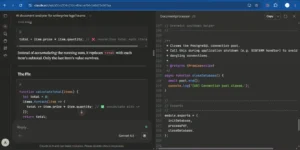
Research and Writing Assistance: The quality of the content that Claude can provide me by being able to cite sources and create a detailed outline when creating a long content piece (like this blog post for instance) makes it so much easier for me to feel that we are working together to create an item instead of Claude just generating it automatically.
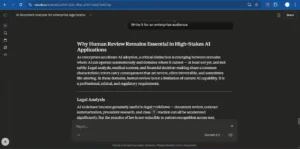
Integrated Tools: By being able to import data from an outside source and have Claude create a cohesive response through synthesis, I can no longer think of data sets, documents or research summaries without including Claude in that process.
Claude is far from perfect – at times there are outputs that will miss some subtle distinctions or will not be accurate without human review, especially in legal, medical, and highly technical areas of work. However, in comparison to any of the other tools I have worked with in the past, I feel that Claude provides me with a greater sense of utilizing a work-oriented, context-aware, and collaborative tool, particularly for enterprise-level tasks.
Where anthropic claude AI is headed next
The future is looking bright:
- Government and education sectors will embrace claude computing more widely.
- There will be more multi-agent collaborative efforts as AI systems coordinate a wealth of complex workflows with minimal human assistance.
- AI will be able to integrate seamlessly with tools in enterprise software in the near future by using real-time, constantly changing data.
- The organizations that utilize these advanced autonomous models will continue to improve safety.
Conclusion
Anthropic Claude AI is an important step forward for conversational/generative AI development and the impact of Claude on the way we think about intelligent systems cannot be overstated, for all developers, researchers, end-users and curious individuals. From its long context windows, to its cooperative ability to use agents and memory and its integration into enterprise systems, Anthropic has lifted the bar on what we can achieve with claude-based AI solutions.
As AI becomes more integrated into our lives and our workflows, tools like Claude should inspire us to not only create (and innovate) but also to re-examine the methods by which we develop safety, alignment and user-centered design for all applications.

Kotaru Venkata Ramana
I write about AI in education and AI exploration, focusing on how artificial intelligence can support learning, teaching, and the future of education in simple and practical ways.