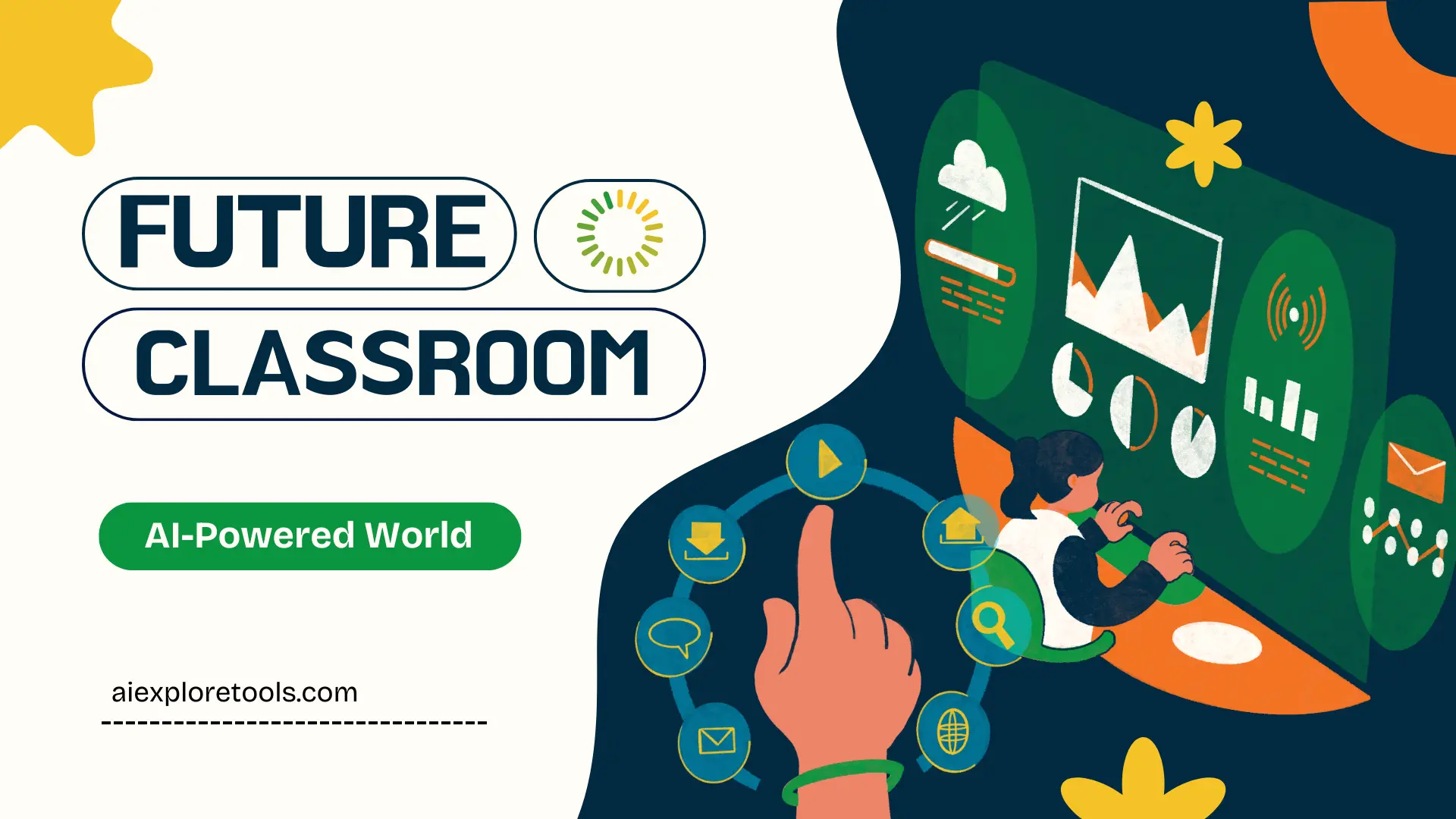
Education is at a critical juncture in terms of change in history where we are seeing one of the greatest evolutions due to technology, specifically AI and digital technology, which will change the way we learn, teach, and evaluate success. The Future of Education will be driven by AI, where we will no longer see classrooms filled with chalkboards, books, and standardized tests. Future classrooms will have intelligence built into them. The Future Classroom will be Intelligent, Personalized, & Global, connected by AI to provide an adaptive learning environment.

Teachers, Educators, and Students worldwide from around the Globe are now witnessing how AI will continue to revolutionise and improve student engagement and learning experiences. The Future Classroom is not replacing Educators, instead, it is a way in which Educators will have access to new tools that will allow for more collaborative learning within the classroom and support of students through the creation of adaptive learning environments.
In this article we will look at what the future classrooms will look like within an AI-powered world as well as its impact on educational opportunities for Learners globally and why this change is needed for the next generation of learners.
The ecosystem constitutes the future classroom
Technology, human creativity, data-driven insights and lifelong learning combined to create a new kind of educational setting that can physically exist anywhere e.g. at home, in VR (Virtual Reality) Environment and through Hybrid Models (Online/Offline).
An important part of this ecosystem is AI (Artificial Intelligence), which acts as the learner’s digital assistant helping them discover how they learn most effectively, identify where they may be struggling and provide tailored recommendations to improve.
For countries such as India, where class sizes may be large, and in the US, UK and Canada where providing access to inclusive and equitable education remains a priority, the shift to individualized learning is significant.
Personalized Learning – Each Student is Unique
In a classroom setting, AI has provided significant enhancements in personalising student learning, which is probably one of the biggest impacts that AI has had on education. Many classes are typically taught at a set level regardless of student understanding; therefore, there is always a chance that some students may not be able to keep up with the pace of their peers and are unable to succeed as a result. By utilising AI technology, new ways of learning can be created.
Future learning experiences will provide students with the following features:
- Changing lesson intensity as needed, in real-time.
- Providing recommendations on materials that best suit their learning style.
- Providing timely feedback and explanations.
- Monitoring progress throughout the student’s learning journey and helping them develop their skills over time.
An example of how this may work is that a student in the UK may receive additional support if Math was difficult for them, such as providing them with visual aids and further practice work, while a student in Canada who excelled in Math would be provided with more advanced problem-solving challenges than their peers. Developing a system that allows for greater personalisation of education ultimately results in more effective and engaging global educational experiences for all learners.
How the Role of Teaching Has Evolved
There’s a perception that technology will one day drive out our teachers from being involved with students when they use technology; however, there is actually a strong argument against this view. In fact, the role of the teacher in Future Classrooms is on the rise, not decline.
In Future Classrooms, a teacher is defined as follows:
- Facilitator of student learning instead of a Teacher of Student’s Theory
- Mentor for developing Critical Thinking Skills and Creativity
- Emotional Supporter/Personal Motivator for Student Success
- Developmental Designer for Students’ Successful Learning Experience
Use of Technology will allow Teachers in the United States, India, and throughout the World to spend their time on the relationships they have with their students and/or develop new ideas and solutions to challenges. Examples of Technology Tasks that can be completed with the help of Modern Technology include: Grading, Tracking Attendance, Analyzing Performance.
Artificial Intelligence and Smart Curriculum
In the future, smart curriculum will not be as static as it is today. Instead of using textbooks that are outdated every 3-4 years, the future of education will be driven by AI-based content, which will be constantly changing.
With the use of AI in the classroom, learning material can:
- Be continuously updated with database data
- Be modified for different areas and cultures
- Include interactive simulations, multimedia, etc.
- Adapt to trends in employment and career development.
This concept is even more important in an international context. For example, students in India will likely focus on technology for job creation, whereas students in Canada and/or the USA may be concentrating on sustainable development, innovation, and entrepreneurship. The future of education will be relevant and practical and prepare students for the future.
Collaborative Learning Through the Use of Technology in A Global Environment.
Global classrooms, whether physical or virtual, have no limitations. With technology powered by artificial intelligence (AI), students located anywhere around the globe can interact and work together virtually on projects by collaborating with each other’s insights.
For instance: an Indian girl can participate in a virtual science class hosted in the UK while a mentor based in Canada helps guide both students and their instructors on other continents. The use of AI will allow educators to facilitate language translation, time-zone coordination, and accessibility to other countries allowing for a seamless experience for all of the students involved.
By exposing students to experiences globally, they will develop their ability to communicate with different cultures and become more prepared to function as part of a global interdependent future.
Evaluating Learning Beyond Traditional Assessment Methods
The conventional way to evaluate students (using standardized testing) is based on rote memorization. In the next generation of education, AI will allow for real-time evaluations based on multiple measurements throughout the whole academic experience.
With the introduction of AI in the classroom, there will be several key differences in how we determine an individual’s educational progress.
- Continuous, rather than at predetermined intervals
- Skill-based and competency-based, as opposed to knowledge-based
- Based on real-world experience rather than constructed situations
- Decreased Stress and More Accurate
In the future of education, students from both the United States and the United Kingdom may be assessed not just through tests but also through projects, simulations, and team-based assignments; AI will track student progress in a behind-the-scenes fashion. Therefore this model will promote the ability to learn better and reduce performance anxiety.
How Can AI Support Inclusive Education & Accessibility
The future of education with the continued development of Artificial Intelligence provides the opportunity for students who have disabilities, students who speak different languages, and students who have different learning styles to learn in an inclusive classroom environment.
Examples of how Artificial Intelligence will change the way we educate students are:
- Convert Text to Speech and Speech to Text
- Provide Real-Time Captions and Translation
- Create Different Versions of the Same Content for Neurodiverse Students
- Create Personalized Learning Pathways
Whether we live in India, Canada, the United States, or the United Kingdom, the development of AI will continue to support Inclusion in Education and Accessibility for all students, regardless of economic status.
Data-Driven Insights for Better Education Systems
In a future educational setting, Data will be gathered not as a tool for tracking down students or teachers, but rather as a way of enhancing the learning experience. Through AI analysing the way students learn, both Teachers and Education Policy Makers will be able to analyse the patterns of student learning, enabling them to make better informed educational decisions.
The use of Data in the future of learning will be able to:
- Identify Learning Gaps early in a student’s learning journey
- Improve the Design of Curricula
- Support Teachers in Professional Development
- Improve National Education Policy
When Data is used ethically, all Education Systems around the Globe can be made More Efficient, More Equitably Distributed, and More Responsive to Change.
Ethical Considerations & Responsible AI Use in Education
AI brings many benefits to the Classroom; but it also raises complex ethical issues. Data Privacy, Algorithm Bias, Technology Dependence, etc., are just a few examples.
The Future of Education must include the following:
- Protecting Student Data
- Transparency in AI Decision Making
- Universal Access to Technology
- Maintaining Human Values in Learning
Countries such as the USA, UK, Canada, and India are developing policies to use AI in education responsibly. A balanced approach will help ensure that the use of Technology to Enhance Learning does not compromise Trust and Fairness.
Student Work Preparation for Career Paths in the Future
The future class will be built around more than just book learning; it will prepare students for jobs that don’t exist yet. By using AI in the classroom, we will prepare students for the skills they will need to have when looking for employment, including:
- Critical Thinking
- Creative and Innovative Thinking
- Digital Literacy
- Collaboration and Communication
In order to teach children how to successfully work alongside AI in the future of education, we must teach children a mindset that will support and enable their ability to succeed in an ever-changing world.
The Global Network of AI-Powered Education
From primary school to PhD programs, the impact of Artificial Intelligence on education is felt at every level around the world. While the speed of implementation may vary by country, education is shifting to be more adaptable to each individual and therefore more inclusive of a larger segment of the global population in terms of access to education.
In the future, educational systems will be developed through global collaboration and knowledge sharing. Countries such as the USA, UK, India and Canada will have a profound effect on global standardisation and direction as they collaborate and share knowledge on the best practices in the delivery of education through the use of Artificial Intelligence.
Conclusion: Innovations in the Learning Environment.
Educators and administrators are working towards creating a future environment that includes AI technology in education and are planning to train AI technologies to work alongside human teachers. Today’s students need an environment that inspires curiosity and encourages creativity. AI will provide us with better opportunities to make learning and teaching more personalized, connected and smarter.
The future of education is much smarter and more personalized than it is today, and it will be built on the foundation of AI technology supporting teachers in the classroom.
As we move forward into the future, we will continue to see the influence of both technological and human decisions on the education environment of tomorrow.

Kotaru Venkata Ramana
I write about AI in education and AI exploration, focusing on how artificial intelligence can support learning, teaching, and the future of education in simple and practical ways.